
PVC pipe systems have been used safely for natural gas distribution across Europe for decades.
They form a significant part of existing low-pressure gas networks and have demonstrated long-term mechanical stability and leak-tight performance in buried infrastructure.
Recent European research confirms that both existing PVC pipelines and new PVC pipe systems – including unplasticised PVC (PVC-U), High Impact PVC (PVC-HI) and molecularly oriented PVC (PVC-O) – are suitable for future hydrogen distribution, supporting Europe’s transition towards low-carbon energy systems.
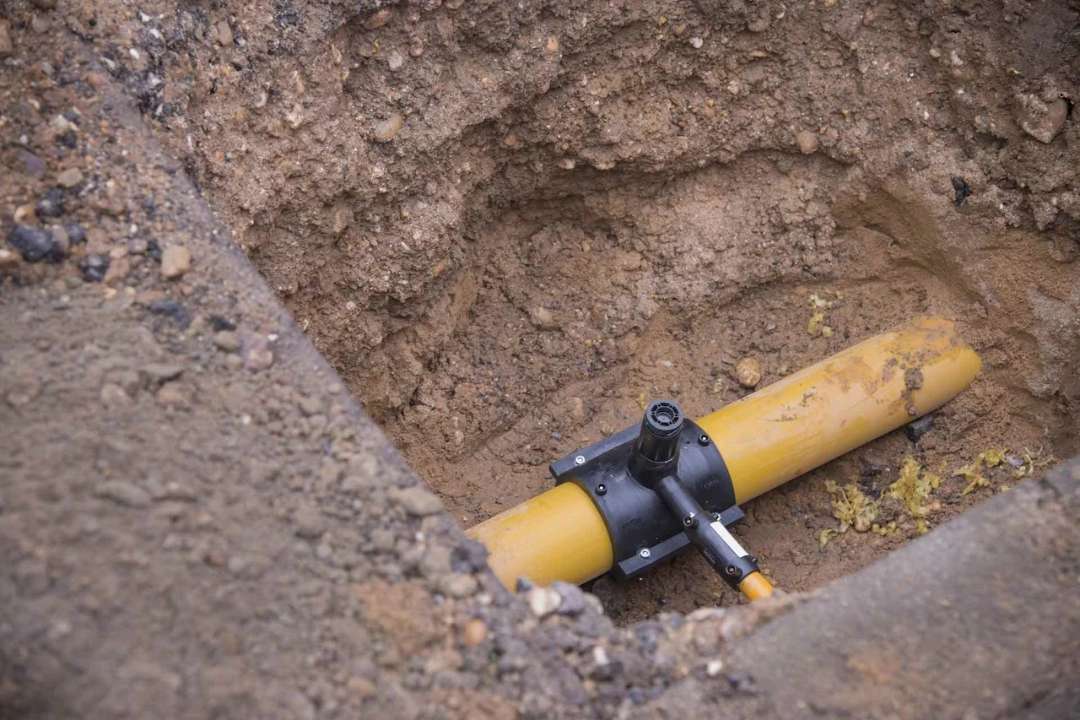
Key Reasons to Choose PVC Pipes for Natural Gas & Hydrogen
Proven Performance in Gas Distribution
PVC has been part of European natural gas networks for more than half a century.
Early systems were based on PVC-U. Since the late 1970s, PVC-HI has become the established material for low-pressure gas distribution. These materials have demonstrated long-term mechanical stability and low failure rates in buried applications.
This extensive operational experience provides confidence when assessing suitability for hydrogen distribution.
Hydrogen Compatibility
Hydrogen is expected to play an increasing role in Europe’s energy system.
Independent research carried out by Kiwa under the former PVC4Pipes platform – now continued by VinylPlus Pipes – has assessed hydrogen permeation and joint performance in PVC gas pipelines.
Key findings:
- Very low hydrogen permeation rates
- Comparable performance of PVC-O, PVC-U and PVC-HI under hydrogen exposure
- Stable mechanical properties after long-term service
- Joint performance under hydrogen conditions remains reliable
These findings build on decades of operational experience with PVC in European gas networks.
Both existing PVC gas pipelines and new PVC systems — including PVC-HI and PVC-O — are considered suitable for hydrogen distribution in low-pressure networks.
Kiwa and Netbeheer Nederland — the association of Dutch electricity and gas network operators – continue to expand the knowledge base.
Download studies:
PVC-O for Future Networks
PVC-O enhances the strength and ductility of conventional PVC through a controlled production process.
For new hydrogen-ready networks, PVC-O offers:
- High strength with reduced wall thickness
- Excellent impact resistance
- Efficient hydraulic performance
- Lightweight handling in larger diameters
These properties make PVC-O well suited for modern gas and hydrogen distribution systems.
Infrastructure Resilience and Energy Transition
The ability to use existing PVC gas infrastructure for hydrogen distribution can support a cost-efficient and resource-efficient energy transition.
Long service life, corrosion resistance and stable mechanical performance contribute to resilient and future-ready distribution networks across Europe.