
PVC conduit systems provide durable protection for power and communication cables in underground infrastructure.
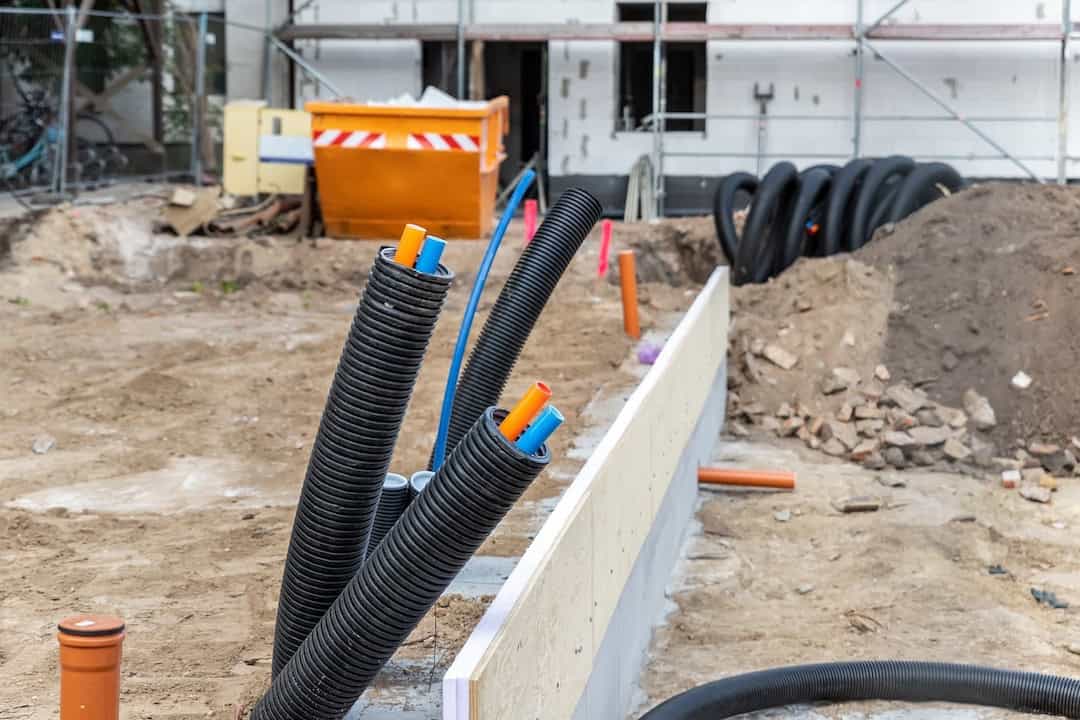
Installed around electrical, fibre and telecommunications cables, they help protect critical connections from mechanical loads and external influences while providing a defined pathway for cable installation, maintenance and replacement.
With their corrosion resistance, mechanical performance and long service life, PVC cable ducts support reliable energy and digital infrastructure across Europe.
Key Reasons to Choose PVC Pipes for Cable Protection
Protecting Energy and Digital Infrastructure
Reliable electricity and communication networks are essential to modern society.
PVC cable ducts are used to protect the cables that distribute electricity and carry telecommunications and data. By placing these connections in protected underground routes, conduit systems help safeguard infrastructure against external damage and provide an organised pathway for future access.
Applications include:
- Electricity distribution
- Renewable energy connections
- Telecommunications
- Fibre-optic networks
- Transport infrastructure
- Urban utility networks
- Industrial sites
- Connections to buildings
As Europe expands and modernises electricity and digital networks, durable cable protection will remain an important part of resilient infrastructure.
Designed for Replacement and Future Upgrades
Cable networks do not necessarily have the same service life as the infrastructure surrounding them. Capacity requirements can change, cables can be damaged and networks may need to be upgraded as electricity demand and digital connectivity increase.
Installing cables inside dedicated ducts can make these changes easier.
Rather than excavating the complete route, cables can in suitable installations be pulled from the conduit and replaced while the duct infrastructure remains in place. This can reduce excavation, disruption and the resources needed for future network upgrades.
Cable ducts can therefore be viewed not only as protection for today's cables, but as long-life infrastructure that supports future changes to the network.
Enabling Cable Recovery and Recycling
Cable protection can also support more efficient recovery of valuable resources.
Power cables contain significant quantities of metals such as aluminium and copper. When cables are buried directly in the ground, recovering them at end of service may require excavation along much of the cable route.
This can make removal costly and disruptive, meaning that decommissioned cables may instead be left underground. Cable ducts can facilitate cable removal and replacement, helping enable recovery and recycling of valuable cable materials.
A 2025 Norconsult study for Pipelife Norway found that around 90% of decommissioned underground cables reported by surveyed grid companies are left in the ground. In a modelled 25 km installation, retrieving cable from ducts resulted in around 80% lower emissions than excavating a directly buried cable route.
Fire Performance and Indoor Applications
Rigid PVC has inherent fire-performance characteristics. It is difficult to ignite and typically self-extinguishes when the external flame source is removed.
For conduit systems installed inside buildings, the performance of the complete product must meet the relevant European and national requirements for the intended application.
Circularity and End-of-Life
PVC cable ducts combine a long service life with the possibility of material recycling at end of life.
Rigid PVC can be mechanically recycled and used again in appropriate applications. Within the VinylPlus® framework, the European PVC value chain continues to improve the collection, recycling and traceability of PVC construction products.
Cable ducts can contribute to circularity in another important way: by providing access to the cables themselves.
Where cables can be removed from the conduit rather than left underground, valuable metals and other materials can be recovered and directed towards recycling. The conduit infrastructure may also remain available for subsequent cables, extending the useful life of the installed system.