
PVC pipes are widely used in industrial applications due to their high corrosion resistance and long service life. They safely transport process water and a wide range of chemicals, even in demanding industrial environments.
In applications requiring higher temperature resistance, chlorinated PVC (PVC-C or C-PVC) offers extended performance capability while maintaining similar corrosion resistance and durability characteristics.
With low maintenance requirements and reliable hydraulic performance, PVC piping systems support safe, efficient and cost-effective industrial operations.
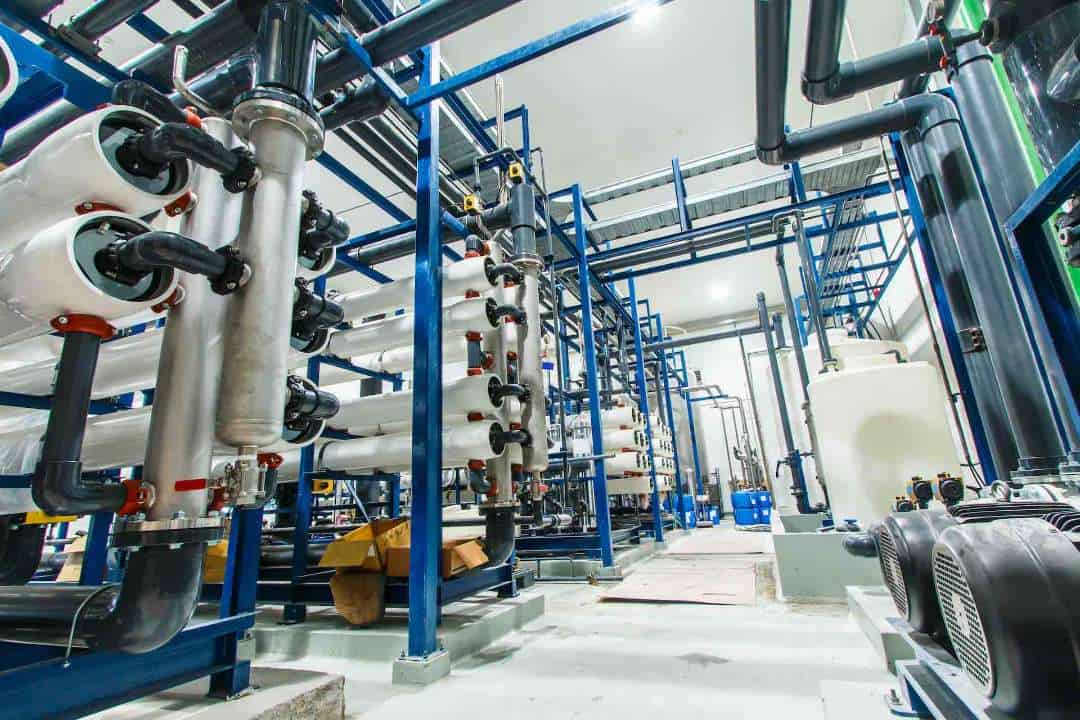
Key Reasons to Choose PVC for Soil and Waste Systems
Chemical Resistance and Process Safety
PVC offers high resistance to a broad range of chemicals, helping maintain structural integrity and system safety.
For applications involving elevated operating temperatures, PVC-C provides enhanced temperature performance while retaining corrosion resistance, making it suitable for more demanding industrial processes.
Corrosion-Free Performance
Unlike metallic materials, PVC does not rust, pit or scale. This ensures stable internal diameters and predictable hydraulic performance over time.
Maintaining flow efficiency is particularly important in industrial systems where process stability and operational continuity are critical.
Long-Term Operational Reliability
Industrial installations are long-term investments. PVC pipes are designed to withstand mechanical loads, pressure variations and demanding environmental conditions.
Low degradation rates and stable material properties contribute to predictable maintenance planning and long-term system integrity.
Efficiency & Cost Control
PVC’s lightweight nature simplifies transport, handling and installation. Prefabrication and modular system design are also supported by the material’s ease of processing.
Low maintenance needs and corrosion resistance contribute to cost-efficient operation over the full service life of the installation.
Typical Industrial Applications
PVC piping systems are used across a wide range of industrial sectors, including:
- Chemical processing – transport of acids, alkalis and saline solutions
- Water treatment & desalination – process water, filtration and dosing systems
- Food & beverage production – cooling water and non-product contact systems
- Energy & power plants – cooling circuits and utility water systems
- Electronics & surface treatment – chemical baths and rinse water transport
- Industrial HVAC & cooling systems – chilled and process water distribution
Environmental Performance
Life cycle assessments indicate favourable environmental performance compared to many alternative pipe materials. Long service life, reduced replacement frequency and efficient material use contribute to resource-efficient industrial infrastructure.