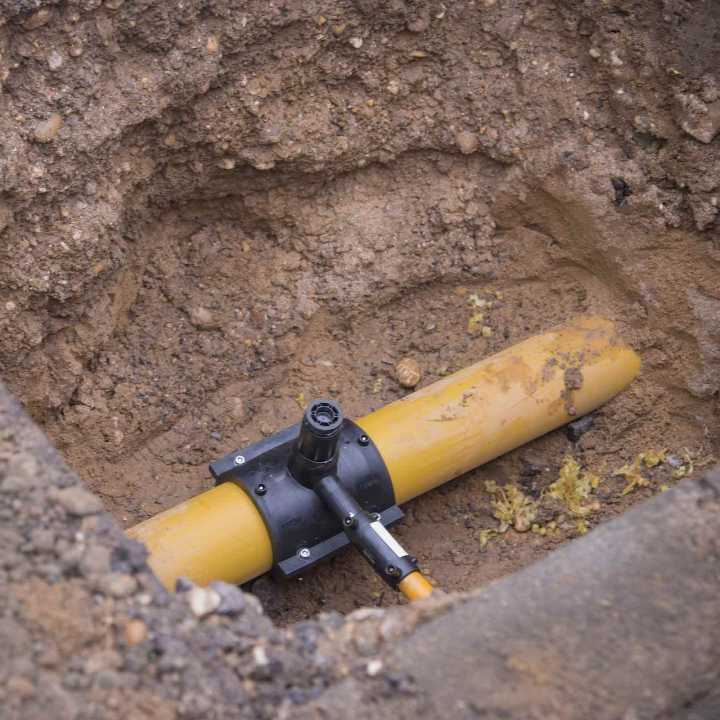
PVC piping systems are available in several material grades, each engineered to meet specific performance requirements.
The PVC family used in pipe systems includes unplasticised PVC (PVC-U), chlorinated PVC (PVC-C), molecularly oriented PVC (PVC-O), and modified PVC (PVC-M / PVC-Hi).
Each type offers distinct advantages in terms of strength, temperature resistance, impact behaviour and pressure performance.
PVC-U (Unplasticised PVC)
PVC-U is the most widely used PVC material in piping systems across Europe.
It is a rigid, high-strength thermoplastic with excellent long-term stiffness, corrosion resistance and durability. PVC-U pipes have been installed since the 1930s and demonstrate proven performance over many decades of service.
Key Characteristics
- High tensile strength and stiffness
- Excellent resistance to corrosion and chemicals
- Very low internal roughness, ensuring stable hydraulic capacity
- Strong resistance to drinking water disinfectants
- Long service life (100+ years in buried applications)
- Service temperature up to 60°C
- Mechanical recyclability
Typical Applications
- Drinking water supply (pressure)
- Sewage and underground drainage
- Soil and waste systems inside buildings
- Irrigation
- Rainwater systems
PVC-U represents the reference solution for both pressure and non-pressure infrastructure applications.
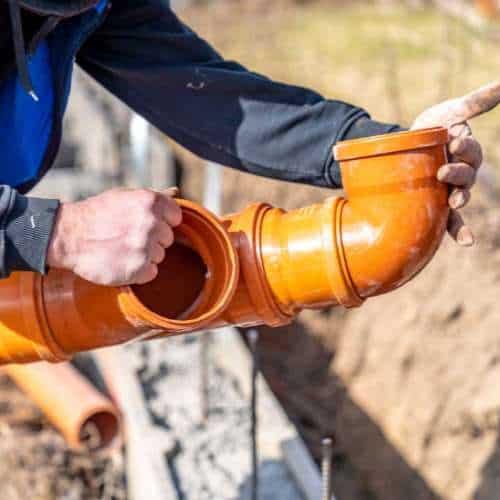
PVC-O (Molecularly Oriented PVC)
PVC-O is produced by stretching PVC-U pipe in a controlled process that aligns the molecular structure. This orientation significantly enhances mechanical performance.
The result is a material with very high strength and impact resistance while maintaining low weight.
Key Characteristics
- Very high minimum required strength (MRS)
- Excellent impact resistance
- Superior strength-to-weight ratio
- Thinner wall for same pressure class
- Increased hydraulic capacity
- Long service life in pressure applications
- Mechanical recyclability
Typical Applications
- Drinking water transmission mains
- Irrigation pressure pipelines
- High-performance water distribution networks
PVC-O enables lighter pipes with outstanding pressure resistance, reducing material use and transport impacts.
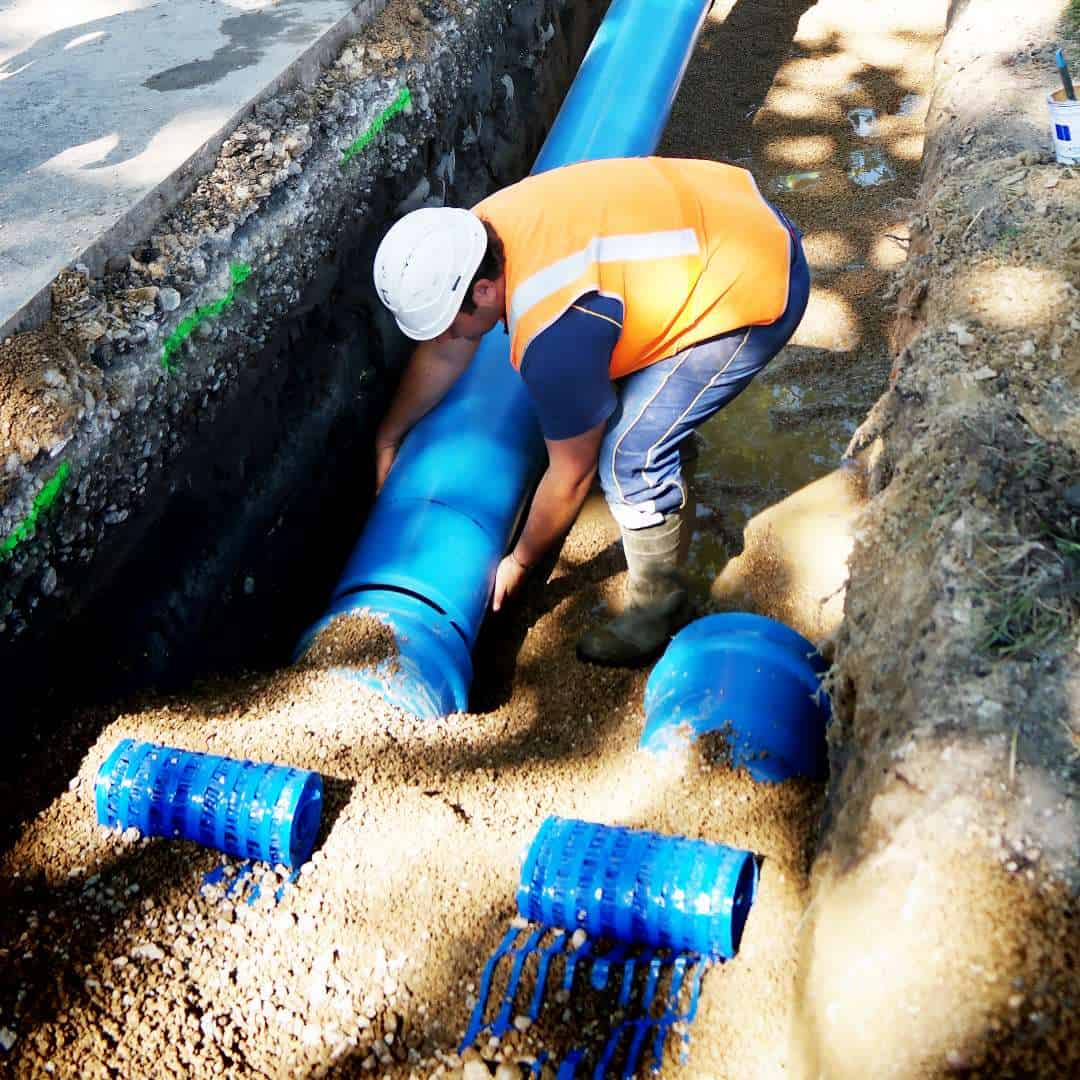
PVC-C (Chlorinated PVC)
PVC-C is produced by post-chlorination of PVC resin, increasing its chlorine content and raising its temperature resistance.
It maintains the corrosion resistance and fire performance of PVC while allowing operation at significantly higher temperatures.
Key Characteristics
- Service temperature up to 90–100°C
- High Vicat softening temperature
- Excellent resistance to hot water and disinfectants
- Strong fire performance (self-extinguishing)
- Good long-term pressure resistance
Typical Applications
- Hot and cold water installations
- Industrial process piping
- Fire sprinkler systems (where permitted)
PVC-C is the preferred PVC solution for hot water and elevated temperature applications.
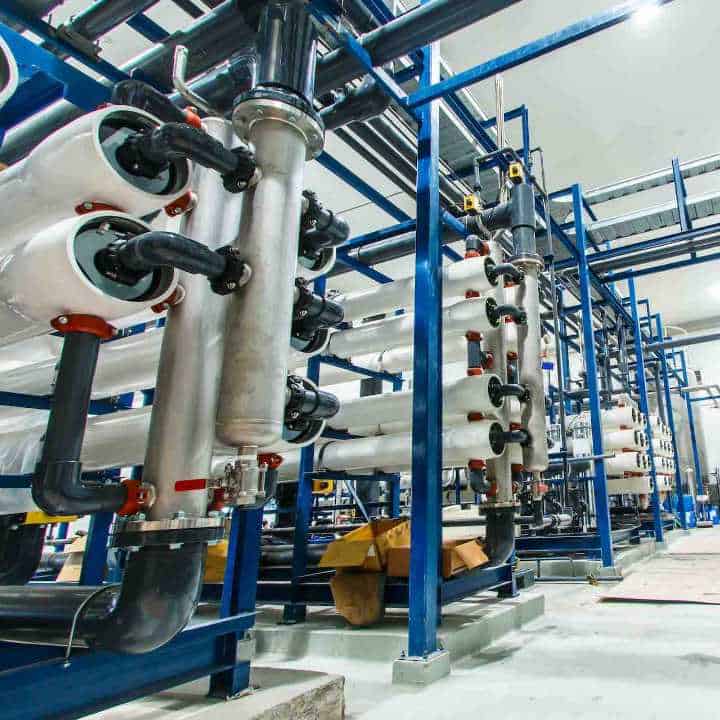
PVC-M (Modified PVC)
PVC-M refers to modified PVC grades developed to improve ductility, impact resistance and resistance to crack propagation.
High-impact PVC (PVC-Hi) is produced by adding impact modifiers to standard PVC-U. Depending on the technology used, it may also be referred to as PVC-A (acrylic-modified PVC).
Compared with PVC-U, PVC-M offers:
Key Characteristics
Compared with PVC-U, PVC-M offers:
- Improved impact resistance
- Enhanced resistance to slow crack growth
- Greater ductility under stress
- Increased safety margins during installation
These properties make PVC-M particularly suitable for pressurised networks operating under demanding conditions.
Typical Applications
- Drinking water distribution
- Irrigation pressure systems
- Gas distribution networks
- Installations in colder climates
PVC-M combines the durability and corrosion resistance of PVC with enhanced mechanical robustness.