
PVC pipe systems are widely used in heating, ventilation and air conditioning (HVAC) installations across residential, commercial and industrial buildings.
They provide a cost-efficient, durable and corrosion-free solution for condensate drainage, ventilation ducts and auxiliary piping. Unlike metal systems, PVC does not rust or corrode and offers inherent resistance to moisture and chemically aggressive condensate.
Lightweight handling and long service life support reliable building performance over decades.
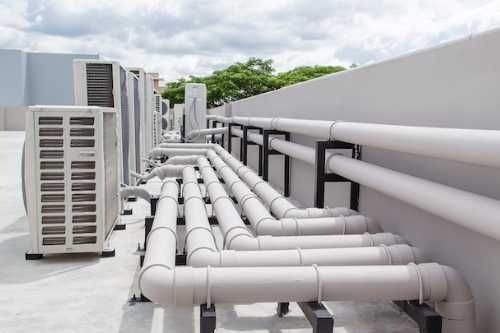
Key Reasons to Choose PVC Pipes for HVAC
Reliable Condensate Drainage
Modern condensing boilers and air conditioning systems generate condensate that can be mildly acidic.
PVC pipes resist chemical attack from condensate and maintain internal smoothness over time. This helps prevent blockages and ensures stable drainage performance throughout the system’s service life.
Durable Ventilation & Duct Applications
PVC is used in ventilation ducts and air handling components where resistance to moisture and corrosion is essential.
Unlike metal ducts, PVC does not oxidise in humid air streams. This contributes to long-term structural integrity and consistent airflow performance.
Supporting Energy-Efficient Building Systems
Energy-efficient buildings rely on durable and low-maintenance infrastructure.
PVC pipe systems contribute through:
- Stable long-term performance
- Reduced risk of corrosion-related failures
- Lightweight installation in complex building layouts
These properties support reliable HVAC operation in modern energy-efficient buildings across Europe.
Fire Performance in Building Applications
PVC has inherent fire-resistant properties due to its chlorine content. It requires a higher ignition temperature than many common construction materials and will self-extinguish when the heat source is removed.
These characteristics contribute to safe use in HVAC systems installed in residential and commercial buildings, in accordance with applicable European fire performance standards.